Natural Trinity Wellness Blog
Simple wellness strategies and expert insights to help you feel your best — from the inside out.
- Oct 21
Is Your Fish Oil Working? The Enzyme That Decides
Fish oil is one of America’s most popular supplements. Nearly 19 million adults take it, mostly to calm inflammation and protect their long-term health (Sen, 2026).
But a new study from the University of Michigan and MD Anderson Cancer Center found a surprise. Fish oil didn’t help everyone the same way. Whether it helped or hurt depended on one enzyme (Zuo et al., 2025).
This post is based on research reported by Ananya Sen of Michigan Medicine.
First, a Quick Omega-3 Refresher
Omega-3s are healthy fats your body cannot make on its own. You have to get them from food or supplements. The two that matter most are:
EPA, which is strongly linked to calming inflammation
DHA, which is a key building block for your brain and eyes
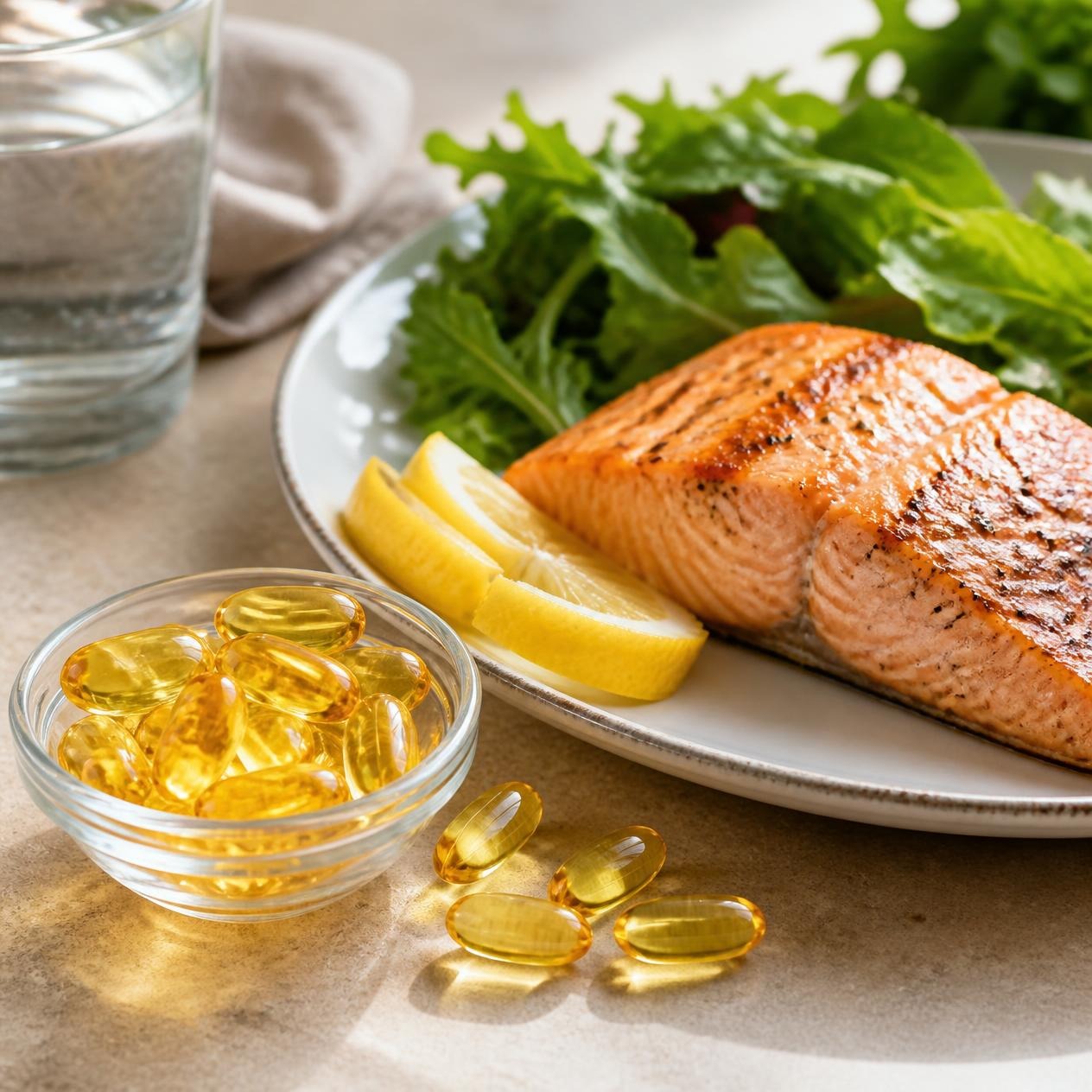
Both are found in fatty fish like salmon, sardines, and mackerel, as well as in fish oil supplements.

Meet ALOX15, the Enzyme Behind the Scenes
Your body doesn’t use EPA and DHA as-is. It turns them into helper compounds called resolvins. Think of resolvins as the cleanup crew that shuts inflammation off once its job is done.
The enzyme that does this work is called ALOX15. Without it, your body has a harder time turning fish oil into those helpful cleanup compounds (Zuo et al., 2025).
What the Study Found
Researchers fed mice a fish oil diet and exposed some of them to chemicals that trigger gut inflammation and colon tumors. Here is what happened (Zuo et al., 2025):
Fish oil raised tumor numbers in the inflamed mice, which was not what anyone expected.
Mice without ALOX15 did worse. Without the enzyme, omega-3s did not protect them.
EPA beat DHA. Mice on EPA-rich diets had fewer tumors than mice on DHA-rich diets.
The form mattered. Certain forms of EPA lowered both the number and size of tumors, especially when ALOX15 was working well.
As lead researcher Imad Shureiqi put it, “Not all fish oil supplements are the same” (Sen, 2026).
What This Means for You (and What It Does Not)
Let’s keep this in perspective. This was a mouse study, not a human trial. It does not mean fish oil causes cancer, and it does not mean you should panic and toss your bottle.
It also fits with what we already know from people. In the large VITAL trial, over 25,000 adults took omega-3s or a placebo for about five years, and omega-3s did not lower overall cancer risk (Manson et al., 2019). Fish oil has real benefits, but it is not a magic shield.
The bigger lesson is this: your body, your genes, and the type of omega-3 you take all shape the result. One size does not fit all.
Simple Ways to Get More From Your Omega-3s
Eat fish first. Aim for fatty fish like salmon, sardines, or trout about twice a week. Food gives you omega-3s plus protein, selenium, and vitamin D, which also support thyroid health.
Read the label. Look at how much EPA and DHA you are actually getting, not just the total “fish oil” amount on the front.
Choose third-party tested brands. This helps make sure your supplement is pure, fresh, and contains what it says.
Calm inflammation from every angle. Omega-3s work best alongside colorful plants, fiber, good sleep, and steady blood sugar.
Talk with your care team. If you have a history of colon polyps, gut inflammation, or take blood thinners, check with your doctor before starting or changing fish oil.
Why This Matters for Thyroid and Metabolic Health
Many of my clients with thyroid or metabolic concerns live with low-grade inflammation that shows up as fatigue, joint aches, or stubborn weight. Omega-3s can be a helpful piece of that puzzle. But this research reminds us that the right choice depends on the whole person, not just a trend.
Get Personalized Support for Your Supplements
Not sure whether your fish oil is the right fit, or even if you need one? Let’s take the guesswork out.
Book your nutrition session today, often with $0 out of pocket using insurance, and get a supplement and meal plan built around your body. You can also explore our self-paced online courses or shop practitioner-grade, third-party tested omega-3s through our trusted Fullscript dispensary. Start today at naturaltrinity.com.
References
Manson, J. E., Cook, N. R., Lee, I. M., Christen, W., Bassuk, S. S., Mora, S., Gibson, H., Albert, C. M., Gordon, D., Copeland, T., D’Agostino, D., Friedenberg, G., Ridge, C., Bubes, V., Giovannucci, E. L., Willett, W. C., & Buring, J. E. (2019). Marine n3 fatty acids and prevention of cardiovascular disease and cancer. New England Journal of Medicine, 380(1), 23 to 32. https://doi.org/10.1056/NEJMoa1811403
Sen, A. (2026, February 13). Omega-3 fish oil supplements could backfire without this key enzyme. ScienceDaily. https://www.sciencedaily.com/releases/2026/02/260212234216.htm
Zuo, X., Kiyasu, Y., Liu, Y., Deguchi, Y., Liu, F., Moussalli, M., Tan, L., Wei, B., Wei, D., Yang, P., & Shureiqi, I. (2025). Colorectal 15-lipoxygenase-1 as a host factor determining the effects of eicosapentaenoic acid and docosahexaenoic acid on colorectal tumorigenesis in mice. Cellular and Molecular Gastroenterology and Hepatology, 19(12), Article 101607. https://doi.org/10.1016/j.jcmgh.2025.101607